Up to 50% less moisture next to the skin - where the figure comes from
The figure comes from data published by Outlast®, the maker of the PCM technology we use in THE IQONE T-shirts. The tests were carried out by the independent laboratory C. Russ - INSIDE CLIMATE in Munich, for clothing, footwear and helmets. On that basis, Outlast reports up to 50% less moisture in the microclimate next to the skin and up to 48% less sweating compared with materials without PCM. “Up to” marks the upper limit from the tests, not a result you'll see under all conditions.
Below we explain who did the measuring, what such a measurement looks like, what the figure tells you and what you mustn't read into it. If you'd like to understand the mechanism itself first, start with Thermoregulation in clothing.
Who measured it
Behind the measurements are Christoph Russ and his laboratory, INSIDE CLIMATE, in Munich. Russ developed the THG AreaView and THG SleepView methods, which measure conditions in the microclimate - the thin layer of air between the skin and the material. Outlast cites these tests in the description of its technology and notes that details are available on request (Outlast, Thermo-Technology).
An important caveat that we always include: this is Outlast® data for PCM technology across various applications, not a separate test of our T-shirt. THE IQONE T-shirts use the same technology, built into the Outlast® viscose fibre.
What such a measurement looks like
In the THG SleepView test, which Outlast described in 2015, small sensors are placed in the microclimate between the skin and the material, where they measure absolute humidity in real time. The same person is tested once with a PCM material and once without, and the results are compared (Innovation in Textiles, 2015). That particular test involved a duvet: Outlast reported 48% lower absolute humidity under a duvet with PCM fibre than under an ordinary one.
Why measure humidity in the microclimate rather than the amount of sweat in litres? Because it's this layer that decides how you feel. When it holds a lot of moisture, your T-shirt clings, damp patches show, and the moment you step out into cool air you feel cold.
Why the microclimate matters, not the weather
The microclimate is the few millimetres of air between your skin and your T-shirt. That's what decides how comfortable you are, not the reading on the thermometer outside the window. In the same office one person is freezing while another is sweating, because each has a different microclimate: they move differently, dress differently and react differently to heat.
That's why a PCM material responds to the temperature of the skin, not of the surroundings. When the microclimate gets too warm, the capsules collect the surplus. When it gets cooler, they give it back. Measuring humidity in precisely this layer therefore shows what you actually feel on your skin.
What “up to 50%” means
It's the best result achieved in the tests, not an average for every day. The effect depends on how much heat needs collecting at any given moment, how often the temperature changes and what you're wearing. That's why we always write “up to 50%” and always give the source.
Outlast also publishes other results for specific products. One example: for Walero underwear for racing drivers, the company reported 40% less sweat compared with a standard Nomex base layer. These figures don't contradict each other. They show that a result always relates to a specific application and a specific point of reference.
Moisture and sweat: two figures, two measurements
Outlast gives two values, and it's worth telling them apart:
- up to 50% less moisture in the microclimate next to the skin (Outlast, FAQ),
- up to 48% less sweating (Outlast, How it works).
Both come from the same C. Russ - INSIDE CLIMATE tests. Moisture is what you feel on your skin and see on your T-shirt. Sweating is how much sweat your body produces in the first place. Less sweat means less moisture, but moisture also depends on how well the material deals with it.
Why PCM reduces sweating at all
Sweating is the body's way of getting rid of excess heat. When the temperature next to the skin rises, the body dilates its blood vessels and activates the sweat glands. A PCM material takes over part of this surplus: the wax in the microcapsules melts and absorbs heat before the body decides it needs to cool itself down. When the temperature drops, the wax solidifies and gives the heat back.
A classic thermoactive T-shirt works differently. It moves sweat that has already formed to the outside. PCM works earlier, at the heat stage. We describe this in detail in How PCM works.
What this figure doesn't mean
It doesn't mean you'll stop sweating. Sweating is natural and necessary. PCM limits it, but doesn't switch it off. Nor does it mean the T-shirt lowers your temperature: the material evens out its spikes. And it doesn't mean every test under every condition will give 50%. That's the upper limit.
How to test it on yourself
The laboratory measures humidity with sensors. You can check the difference in a simpler way: wear a T-shirt from THE IQONE on a day when you change surroundings a lot. Home, car, office, shop, a walk. Another time, on a day with the same plan, wear an ordinary cotton T-shirt.
Compare three things: your back after a longer drive, the chill you feel after leaving a warm room, and how the T-shirt smells in the evening. These are exactly the moments the laboratory figures describe, just in the language of an ordinary day.
What you see in practice
In THE IQONE T-shirts, this difference shows up in how they look and feel, not in figures in a table:
- Fewer visible patches. In a meeting, in the car, after taking the stairs. See: Sweating at the office - what to wear.
- Less chill when you stop. A drier layer next to the skin doesn't chill you as quickly during a break, in a car park or on the trail.
- Longer-lasting freshness. Less moisture means less odour. A base of Tencel™ and viscose, 93% fibres from wood cellulose, doesn't pick up odour the way synthetics do. See: Why the T-shirt doesn't pick up odour.
- Less changing. One T-shirt from morning to evening, even when your surroundings keep changing all day. See: A T-shirt for changeable weather.
Frequently asked questions
Does the 50% apply to THE IQONE T-shirts?
It's Outlast® data for PCM technology, which we have in the Outlast® viscose fibre. We haven't carried out a separate laboratory test of the T-shirt itself, which is why we always give the source of the figure.
Why “up to 50%” and not an exact figure?
Because the result depends on the application and the conditions. 50% is the best test result for moisture in the microclimate, not a promise for every day.
What's the difference between 48% and 50%?
They're two different measurements from the same tests. 50% refers to moisture in the microclimate next to the skin; 48% refers to sweating itself.
Does the effect disappear after washing?
No. The microcapsules are part of the fibre, not a coating. Wash at 40 °C, without fabric softener. Instructions: Care.
Which T-shirt
For a day full of changing surroundings: Sport Tee Women's or Sport Tee Men's. For cooler days and under a jacket: Sport Longsleeve Women's and Men's.
Sources
- Outlast®: FAQ (up to 50% less moisture; C. Russ - INSIDE CLIMATE tests, Munich)
- Outlast®: How it works (up to 48% less sweating)
- Outlast®: Thermo-Technology (note on the tests, Walero example)
- Innovation in Textiles: Outlast materials reduce humidity and improve sleeping climate (THG SleepView method, 2015)
Author: THE IQONE Team. Updated: 28.10.2026.
Read next
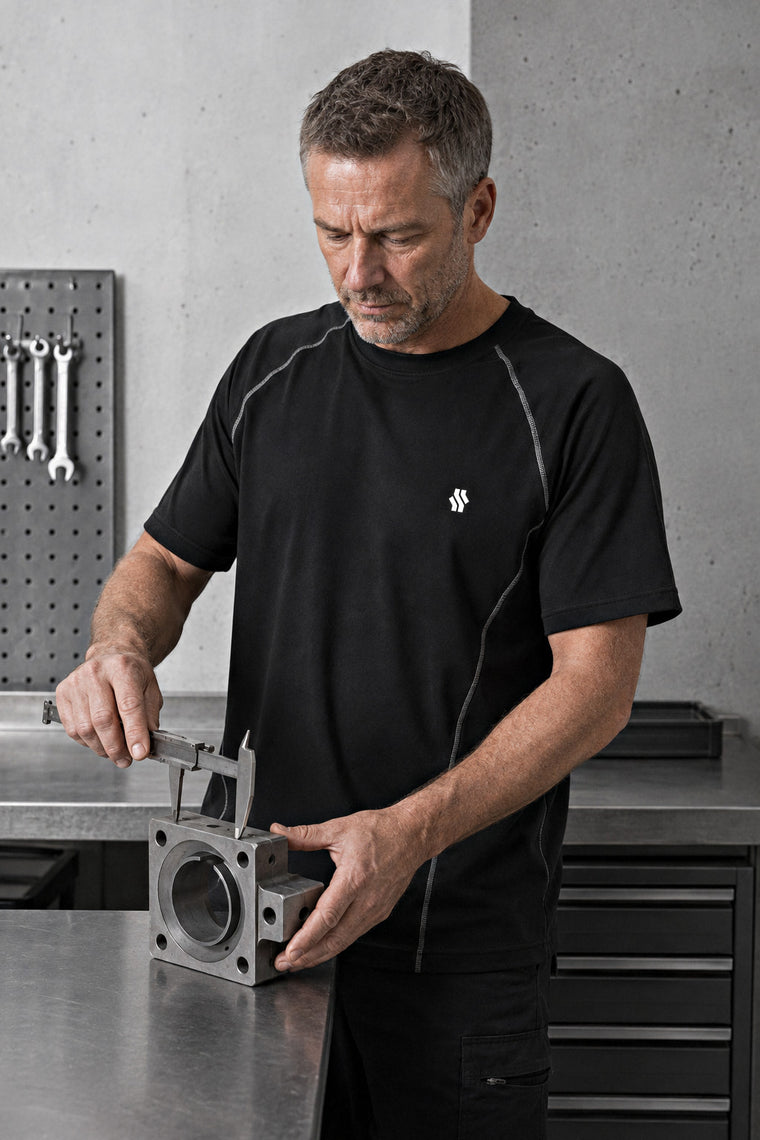
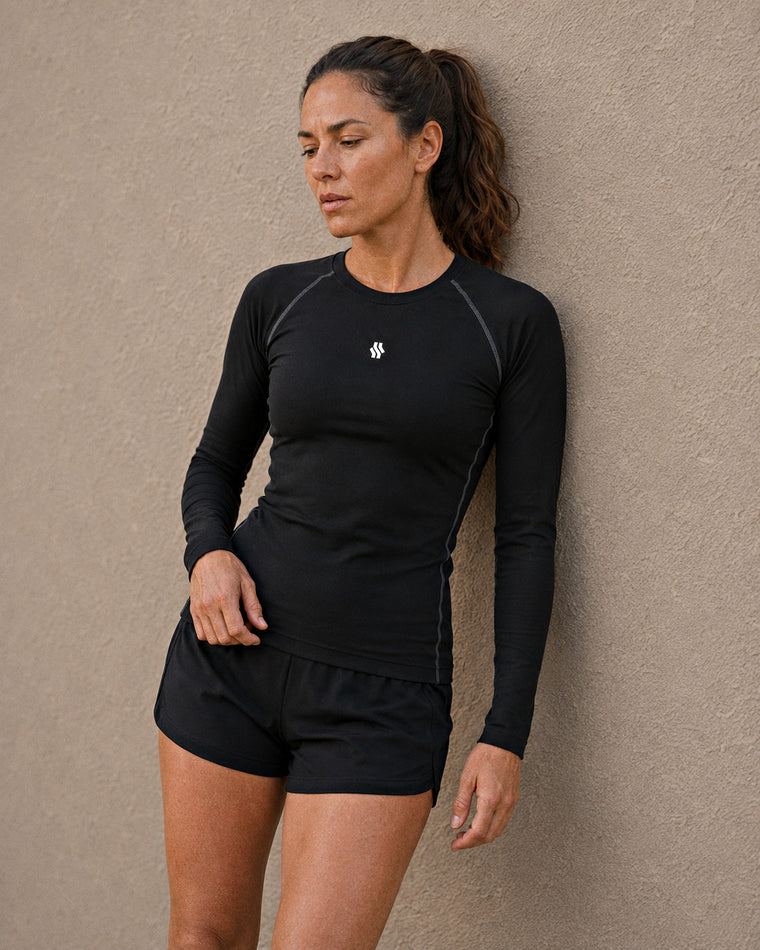
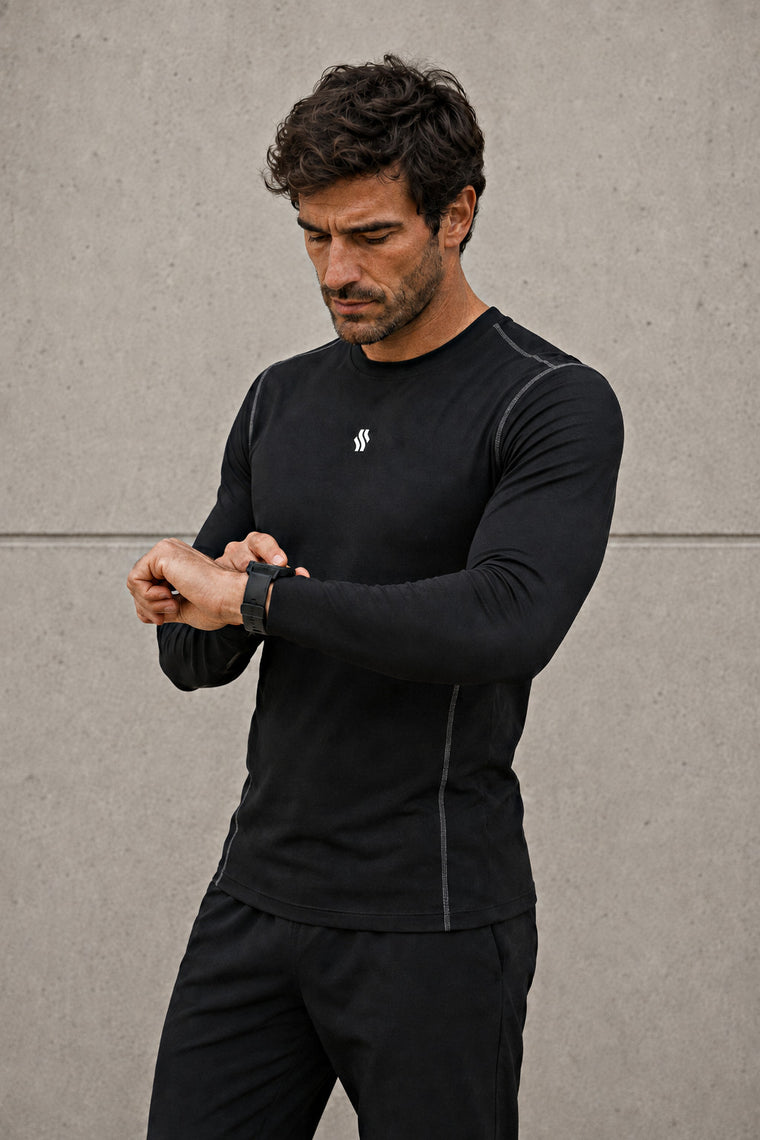
Clothing that reacts for you.
Outlast® PCM microcapsules absorb excess heat and release it when it gets cooler. One layer from morning to night.